There are a number of reasons, the operation is performed on pluća.Najčešći reason including cancer. If a mass is identified in lung tissue, the surgical team will be assigned to remove it. There are several approaches that can be taken, depending on where a mass, as well as its size. Surgery can also perform the fix, or collapsed lung to drain fluid that accumulates in the vicinity.
Today, minimally invasive techniques are used to reduce the likelihood of complications and provide a shorter recovery period for the patient. In this article, we will provide an overview of the differences between traditional thoracotomy and minimally invasive surgery of lung cancer. While the former is still done in some circumstances, the latter is becoming increasingly common.
The types of surgical procedures
First, it is worth considering the different operations performed on the lungs. As noted, most surgical procedures are done to cure lung cancer (LC). If this mass is small and can be found only in a small piece of tissue, a wedge resection is performed to remove that part.
In cases where cancer cells are detected within a larger piece of tissue, lobectomy can be done. This is a procedure in which an entire lobe is removed. If you need to remove two adjacent lobes, the procedure is called bilobectomy.
Saturday, September 3, 2011
Traditional Versus Minimally Invasive Lung Cancer Surgery

Friday, August 26, 2011
Lung Cancer Surgery Options

of lung cancer can be treated with various therapies that are often used in combination to provide the optimum outcome for the patient. Surgical resection is the process by which the tumor is surgically removed, it is usually recommended when the cancer has not metastasized (or spread) beyond the lungs to other parts of the body.
There are several options for performing resection, which may include minimally invasive surgery, or full operation. What techniques are used will depend on various factors, particularly the size and stage of cancer and whether the tumor can be accessed by a surgeon.
thoracotomy the surgeon performs an incision through the chest wall and median sternotomy performed by entering the chest through the breastbone. Both of these methods are usually employed in lung cancer surgery, but they do not involve significant patient discomfort and extended hospital stays with more periods of recovery.
Alternative surgical procedures include anterior limited thoracotomy (ALT), which involves a small incision to allow entry, again through the front of the chest. It should be noted that the incision is much smaller than a standard thoracotomy or median sternotomija.Alternativa the anterior axillary thoracotomy (AAT), which involves a small incision on the chest front, but in the armpits and in the end, there is a postero-lateral thoracotomy (PLT) , which involves an incision on the back or side of the patient's trunk.
Even with better surgical techniques, the patient will experience considerable pain, if the operation involves opening the chest (sometimes known among doctors as "cracking the chest ").
As a result of extended recovery time and patient discomfort, surgical techniques have been developed that do not involve full-blown operation -. These are the so-called minimally-invasive techniques
Video-assisted thoracoscopy (VAT) uses high-powered video cameras and hi-definition screen in combination with diagnostic scans such as CT or PET scans, to target tumors in the lung bolesnika.Rez should be much smaller and no need to open the chest, resulting in less discomfort for patients and greatly reduced the recovery period. Using the video display, the surgeon can resect tumors that were identified during the diagnosis and staging phases.
Some doctors caution the use of VAT, however, as the traditional thoracotomy can detect tumors and other cancers that metastasized were discovered in the initial scan and diagnosis. If you remain undetected cancer can return and the patient will become sick again and for that reason, the VAT is usually recommended for early stage (I and II), cancer, and not spread to other parts of the lungs and body.
It is normal for any surgical procedure to be followed by a phase of chemotherapy or radiation to ensure that the patient's cancer is completely removed or killed. Since treatment of income and in which phase the recommended treatment is determined by the type and stage of lung cancer the patient has.
Introduction to VATS Lobectomy Lung Surgery

There are more than 200,000 diagnosed cases of lung cancer (LC) each year in the United States. Although the incidence rate has been declining since 1991, the disease remains the leading cause of cancer-related deaths. When the condition is detected in stage 1 (ie, localized in the lungs), it can be treated successfully. By the time the cancerous cells have metastasized and spread to distant lymph nodes, it becomes harder to contain.
In the past, the disease is treated by thoracotomy (also known as open chest surgery). The patient's thoracic cavity access surgeon after a long incision is made in prsima.Prsne was cut and the ribs are spread to provide working space. Since the ribs have limited flexibility, the process sometimes resulted in fractures. To resolve this problem, thoracic surgeons began to remove parts of the patient's chest.
Today, minimally invasive techniques are often used to treat lung cancer. One of these techniques is a VATS lobectomy. This article will give an overview of the procedure and describe what to expect during recovery.
As the operation?
lobectomy is the surgical removal of the lobe (ie the portion of the lung). This is one of the most common procedure today for treatment of early LC. With VATS lobectomy, four incisions are made in the patient's chest. Three of the four sections are usually much less than one inča.Četvrti section can be measured to a few centimeters. No need to cut through the sternum and spread rebara.Cijeli procedure is carried out through these small incisions.
the surgeon will insert a thoracoscope, and several other surgical instruments through rezove.Thoracoscope is equipped with small lights and kamere.Fotoaparat transmits images back to the monitor uses the surgeon to see patients in the thoracic cavity.
The tumor is cut away from healthy tissue and extracted through one of the incisions. If the surgeon suspected cancerous cells have spread to nearby lymph nodes (ie the disease is in stage 2), some of them will be biopsied. This is done to confirm or disprove the spread of lung cancer to the lymph nodes.
Once the diseased tissue is removed, the surgeon will make sure that there are no signs of bleeding within the thoracic cavity. Four incisions are then closed and cleaned before the patient was transferred to a hospital recovery unit.
common questions about the work of
Before going through the screening process and go through the procedure, because patients often have many questions. For example, given the success rate for this type of lung cancer surgery and minimally invasive nature, some people wonder why they do not spend all bolnice.Odgovor is twofold. First, relatively few surgeons have mastered the techniques involved in VATS lobectomy. Second, some surgical centers lack the necessary equipment.
Another common area of confusion involves the patient's candidacy. Many people think this form of minimally invasive surgery of lung cancer can be performed on any person who is suffering from the disease. In reality, the procedure is generally reserved for those with stage 1 non-small cell LC.Tumor be measured at least three centimeters and remain localized in the lungs.
the recovery period after surgery is usually less than six tjedana.Pacijent will usually remain in hospital for two or three days after surgery. Then, he or she is released to complete their recovery at home. By the fourth week, most patients are able to return to their normal activity levels, although some require a full six weeks.
VATS lobectomy offers many advantages over traditional surgery, lung cancer was done through torakotomije.Vremena recovery is shorter, with less postoperative pain. In addition, the patient was able to return to normal life faster. If you are suffering from early stage lung cancer, ask your doctor whether you are a candidate for this approach.
Monday, August 8, 2011
Lung Cancer Surgery - Life Can Get Much Better

undergoing lung cancer surgery
Cancers of the lung are divided into faze.Inscenacije system allows physicians to develop treatment plans and accurate prognoze.Položaj and grade of the tumor in the lung to determine if it is operable. When lung cancer surgery is an option, it is usually followed by additional treatments in both small cell and non small cell lung cancer (NSCLC and SCLC ).
thoracotomy
This procedure removes the malignant part of the lungs through an incision in the chest. There are three sub-classifications of this procedure. "Segmentectomy 'only removes the lung cancer tissue and a modest amount of surrounding healthy tissue. According to WebMD, the biggest return with segmentectomy, but it prevents a significant loss of lung function.
lobectomy removes the entire lobe of the lung. There are two on the left side and three on the right side, so that these bodies will continue. Surgeons remove the entire lobe to ensure the cancer is removed. In extreme cases, "pneumonectomy" performed to remove the entire lung. Lung function at reduced capacity after this operation.
The new technology allows surgeons to use VATS for the tumor. Barrels, or "video-assisted surgery thorascopic 'is less invasive then thoracotomy. This is useful for diagnosing cancer, taking tissue samples and when performing a segmentectomy. After surgery, patients will be assessed for lung function and general health before being released.
post-operative care
left thoracotomy chest aching for a long time and chest tube will be inserted into a drain built-up and blood was suctioned tekućine.Fluid the machine and drained to the container. Chest tubes were removed when drainage stops. Although the tubes are often removed within a week, it takes several weeks to recover from this operation.
Respiratory therapists work with post-op patients to improve lung function. The methods include deep breathing exercises in combination with medication to open airways. Extra Care May be required for lobectomy. Studies have shown that surgery increases survival, but complications such as bleeding or pain persisting event.
before surgery is recommended as an option, the patient's pulmonary function and overall heart health are assessed.
Sunday, August 7, 2011
Lung Cancer Surgery - Life Can Get Much Better
This procedure removes the malignant part of the lungs through an incision in the chest. There are three sub-classifications of this procedure. "Segmentectomy 'only removes the lung cancer tissue and a modest amount of surrounding healthy tissue. According to WebMD, the biggest return with segmentectomy, but it prevents a significant loss of lung function.
lobectomy removes the entire lobe of the lung. There are two on the left side and three on the right side, so that these bodies will continue. Surgeons remove the entire lobe to ensure the cancer is removed. In extreme cases, "pneumonectomy" performed to remove the entire lung. Lung function at reduced capacity after this operation.
The new technology allows surgeons to use VATS for the tumor. Barrels, or "video-assisted surgery thorascopic 'is less invasive then thoracotomy. This is useful for diagnosing cancer, taking tissue samples and when performing a segmentectomy. After surgery, patients will be assessed for lung function and general health before being released.
post-operative care
left thoracotomy chest aching for a long time and chest tube will be inserted into a drain built-up and blood was suctioned tekućine.Fluid the machine and drained to the container. Chest tubes were removed when drainage stops. Although the tubes are often removed within a week, it takes several weeks to recover from this operation.
Respiratory therapists work with post-op patients to improve lung function. The methods include deep breathing exercises in combination with medication to open airways. Extra Care May be required for lobectomy. Studies have shown that surgery increases survival, but complications such as bleeding or pain persisting event.
before surgery is recommended as an option, the patient's pulmonary function and overall heart health are assessed.
Lung Cancer Surgery - Life Can Get Much Better

undergoing lung cancer surgery
Cancers of the lung are divided into faze.Inscenacije system allows physicians to develop treatment plans and accurate prognoze.Položaj and grade of the tumor in the lung to determine if it is operable. When lung cancer surgery is an option, it is usually followed by additional treatments in both small cell and non small cell lung cancer (NSCLC and SCLC ).
thoracotomy
This procedure removes the malignant part of the lungs through an incision in the chest. There are three sub-classifications of this procedure. "Segmentectomy 'only removes the lung cancer tissue and a modest amount of surrounding healthy tissue. According to WebMD, the biggest return with segmentectomy, but it prevents a significant loss of lung function.
lobectomy removes the entire lobe of the lung. There are two on the left side and three on the right side, so that these bodies will continue. Surgeons remove the entire lobe to ensure the cancer is removed. In extreme cases, "pneumonectomy" performed to remove the entire lung. Lung function at reduced capacity after this operation.
The new technology allows surgeons to use VATS for the tumor. Barrels, or "video-assisted surgery thorascopic 'is less invasive then thoracotomy. This is useful for diagnosing cancer, taking tissue samples and when performing a segmentectomy. After surgery, patients will be assessed for lung function and general health before being released.
post-operative care
left thoracotomy chest aching for a long time and chest tube will be inserted into a drain built-up and blood was suctioned tekućine.Fluid the machine and drained to the container. Chest tubes were removed when drainage stops. Although the tubes are often removed within a week, it takes several weeks to recover from this operation.
Respiratory therapists work with post-op patients to improve lung function. The methods include deep breathing exercises in combination with medication to open airways. Extra Care May be required for lobectomy. Studies have shown that surgery increases survival, but complications such as bleeding or pain persisting event.
before surgery is recommended as an option, the patient's pulmonary function and overall heart health are assessed.
Thursday, August 4, 2011
Traditional Versus Minimally Invasive Lung Cancer Surgery
Today, minimally invasive techniques are used to reduce the likelihood of complications and provide a shorter recovery period for the patient. In this article, we will provide an overview of the differences between traditional thoracotomy and minimally invasive surgery of lung cancer. While the former is still done in some circumstances, the latter is becoming increasingly common.
The types of surgical procedures
First, it is worth considering the different operations performed on the lungs. As noted, most surgical procedures are done to cure lung cancer (LC). If this mass is small and can be found only in a small piece of tissue, a wedge resection is performed to remove that part.
In cases where cancer cells are detected within a larger piece of tissue, lobectomy can be done. This is a procedure in which an entire lobe is removed. If you need to remove two adjacent lobes, the procedure is called bilobectomy.
When the diseased cells have spread throughout the lung, the surgeon will perform a pneumonectomy to remove the entire organ. His absence will reduce the patient's quality of life, but the patient can live with only one lung.
Minimally invasive approach
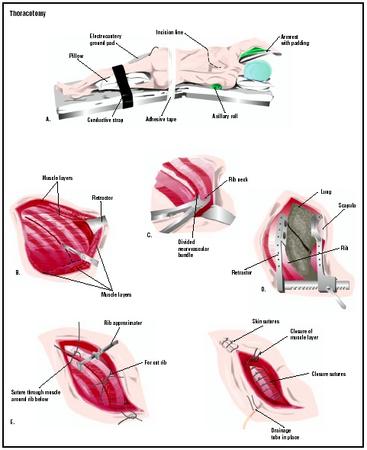
Traditionally, lung cancer surgery was performed through an open chest surgery (ie thoracotomy). Long incision was made in patients by between rebara.Kirurg then uses a retractor to spread the ribs of the patient in order to provide enough space to work. Along with the ribs spread apart, the surgeon access to the site and removed the tumor.
Thoracoscopy can achieve the same results without having to make a long incision and spreading the ribs. Instead, the surgeon will make a few minor rezova.Tanka, tubular instrument called a thoracoscope is equipped with a video camera and inserted through a small incision. As a surgeon takes thoracoscope to the affected tissue, video camera transmits images of the thorax back to the surgical team.
Once the site is identified, other instruments are inserted and guided patients tkiva.Dio contains cancerous cells is cut away and removed.
Differences between traditional and minimally invasive surgery
Since it is so invasive thoracotomy, patients are exposed to several potential complications. This may include respiratory failure, internal bleeding, pneumonia, and air leaks. In addition, the patient is forced to cope with intense postoperative pain during recovery.
With minimally invasive surgery of lung cancer, the potential for complications is significantly reduced. There is far less postoperative pain and recovery period is shortened. It is not uncommon for patients to be released from hospital after two or three days after surgery (compared to up to ten days after thoracotomy).
What to expect after surgery
After the surgery of lung cancer (assuming that the minimally invasive technique), you will experience some degree of tenderness near rezova.Bol will eventually subside. Within a few days, you will be released to complete their recovery at home. Your doctor will prescribe pain medication to minimize discomfort behind. Once you no longer need this medication, you will be able to resume their normal activities. Most patients find that they can return to their normal routine after four or five weeks.
Not everyone is a candidate for minimally invasive surgery of lung cancer. Your doctor will want to perform several tests to verify whether this treatment is appropriate with respect to the performance of the disease and your condition.
Traditional Versus Minimally Invasive Lung Cancer Surgery
Today, minimally invasive techniques are used to reduce the likelihood of complications and provide a shorter recovery period for the patient. In this article, we will provide an overview of the differences between traditional thoracotomy and minimally invasive surgery of lung cancer. While the former is still done in some circumstances, the latter is becoming increasingly common.
The types of surgical procedures
First, it is worth considering the different operations performed on the lungs. As noted, most surgical procedures are done to cure lung cancer (LC). If this mass is small and can be found only in a small piece of tissue, a wedge resection is performed to remove that part.
In cases where cancer cells are detected within a larger piece of tissue, lobectomy can be done. This is a procedure in which an entire lobe is removed. If you need to remove two adjacent lobes, the procedure is called bilobectomy.
When the diseased cells have spread throughout the lung, the surgeon will perform a pneumonectomy to remove the entire organ. His absence will reduce the patient's quality of life, but the patient can live with only one lung.
Minimally invasive approach
Traditionally, lung cancer surgery was performed through an open chest surgery (ie thoracotomy). Long incision was made in patients by between rebara.Kirurg then uses a retractor to spread the ribs of the patient in order to provide enough space to work. Along with the ribs spread apart, the surgeon access to the site and removed the tumor.
Thoracoscopy can achieve the same results without having to make a long incision and spreading the ribs. Instead, the surgeon will make a few minor rezova.Tanka, tubular instrument called a thoracoscope is equipped with a video camera and inserted through a small incision. As a surgeon takes thoracoscope to the affected tissue, video camera transmits images of the thorax back to the surgical team.
Once the site is identified, other instruments are inserted and guided patients tkiva.Dio contains cancerous cells is cut away and removed.
Differences between traditional and minimally invasive surgery
Since it is so invasive thoracotomy, patients are exposed to several potential complications. This may include respiratory failure, internal bleeding, pneumonia, and air leaks. In addition, the patient is forced to cope with intense postoperative pain during recovery.
With minimally invasive surgery of lung cancer, the potential for complications is significantly reduced. There is far less postoperative pain and recovery period is shortened. It is not uncommon for patients to be released from hospital after two or three days after surgery (compared to up to ten days after thoracotomy).
What to expect after surgery
After the surgery of lung cancer (assuming that the minimally invasive technique), you will experience some degree of tenderness near rezova.Bol will eventually subside. Within a few days, you will be released to complete their recovery at home. Your doctor will prescribe pain medication to minimize discomfort behind. Once you no longer need this medication, you will be able to resume their normal activities. Most patients find that they can return to their normal routine after four or five weeks.
Not everyone is a candidate for minimally invasive surgery of lung cancer. Your doctor will want to perform several tests to verify whether this treatment is appropriate with respect to the performance of the disease and your condition.
